


What We Offer

Home |  What We Offer

Manufactured for Your Brand

We offer a wide range of certified safety gloves manufactured in Pakistan and exported to buyers worldwide. Along with our ready product range, we also provide custom glove manufacturing as per customer demand including logo, colors, materials, packaging, and new product development for private label and OEM brands.

What B2B Buyers Get from Noor Sons

Compliance-ready exports

EU Type-Examination Certificates (CIMAC + Intertek), ISO company certs, and TTI lab test reports chromium-safe, azo-free, pH tested all in order before shipment.

Full OEM capability

Custom logo embossing, brand color, palm coating (nitrile/PU/latex), cuff style, gauge, and retail packaging your specification, our production.

Integrated Supply Chain

From wet-blue tanning (Shireen Leather) to grain finishing (Hamid Leather) to glove cutting, stitching, and QC zero external dependency on leather supply.

Free Pre-Bulk Sample

Request one complimentary pair per SKU inspect cowhide quality, stitching, palm thickness, and cuff construction yourself before committing to any order volume.
Industrial Safety Gloves Across Every Protection Category

01

Welding Gloves

Cowhide split leather & goat grain, EN 12477 Type A, EN 407 heat-rated. Kevlar-stitched seams, extended cow-split cuff.

02

Driver & Assembly Gloves

Premium grain goatskin palm, EN 388 tested, cotton interlock back, 360° elastic cuff, reflective strip.

03

Cut & Impact Resistant

HPPE / Aramid / Kevlar liner, nitrile or PU palm coating, EN 388 A4–A6 cut levels, TPR knuckle guard.

04

Mechanical & General Use

Full-grain or split leather, keystone thumb, shirred elastic wrist, fully lined options, inside-seam construction.

05

Cold-Resistant Gloves

Thinsulate or acrylic thermal liner, EN 511 cold-insulation rated, water-resistant outer, gauntlet cuff option.

06

OEM / Private Label

Custom logo, color, gauge, palm coating finish, and retail packaging — produced under your brand name.

Certified Excellence & Industry Standards

Quality Management System

Certified by Assess International Canada (Cert No. AI/MSC/QMS/000075). Confirms our manufacturing processes meet international quality management standards consistent output, documented procedures, and continuous improvement across every production batch.

Environmental Management System

Certified by Assess International Canada (Cert No. AI/MSC/EMS/000075). Confirms our facility operates to documented environmental standards responsible use of tanning chemicals, waste management, and sustainable manufacturing practices.

EU PPE Regulation Category II

Our gloves are independently type-examined and certified as Category II Personal Protective Equipment under EU Regulation 2016/425 Issued by Notified Body CIMAC (#0171) and Intertek (#2575). This means they meet EU health and safety requirements and are legally CE-markable for sale across Europe.

How Every Gloves is Made

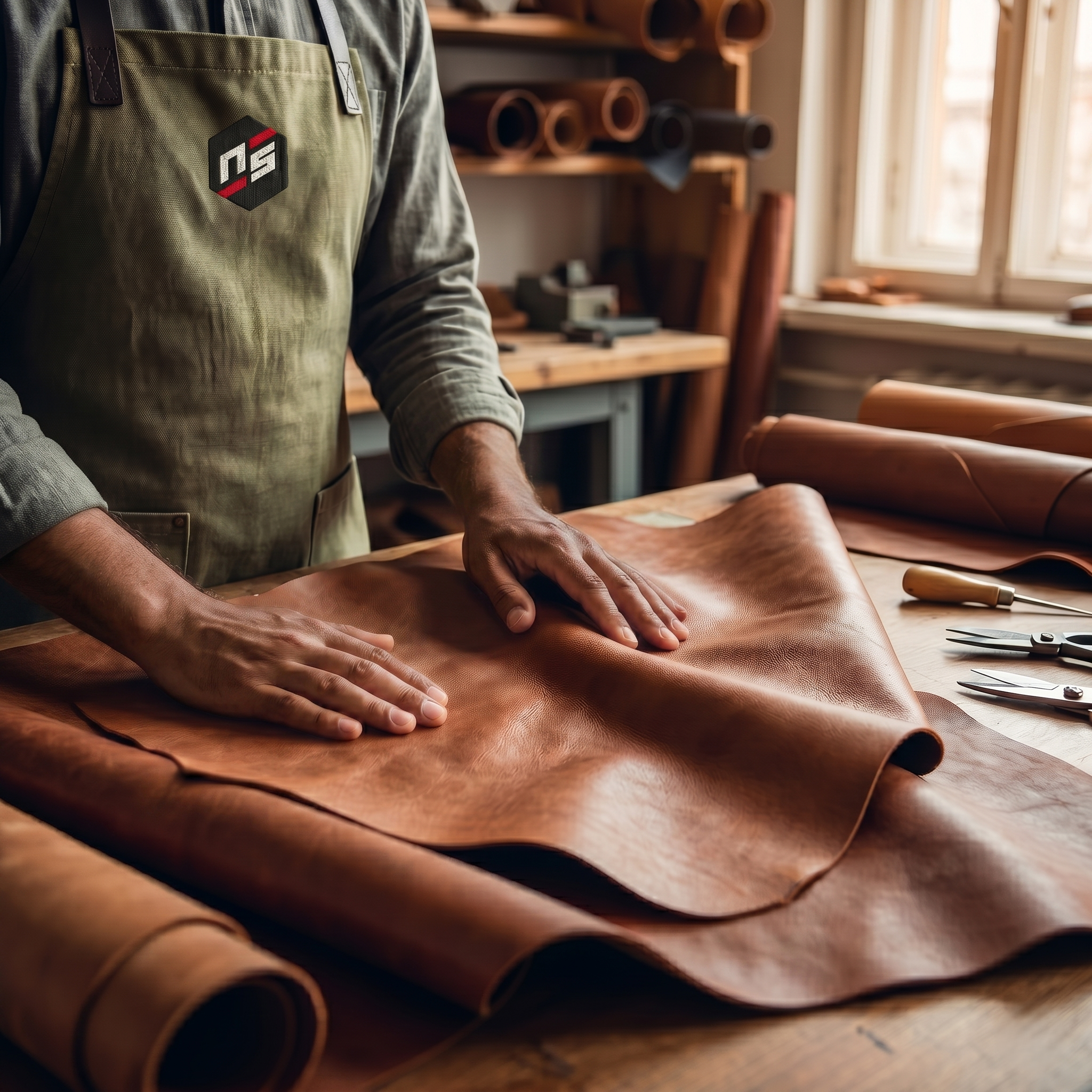
Leather Sourcing
Leather Sourcing / Step 01

Leather Sourcing

Cowhide split, goat grain, and full-grain leather sourced through our in-house Shireen Leather unit.

  • Cowhide split, goat grain, and full-grain leather.
  • Sourced through our in-house Shireen Leather unit.
  • Tanning chemicals imported from Italy & Germany.
Cutting & Pattern
Cutting & Pattern / Step 02

Cutting & Pattern

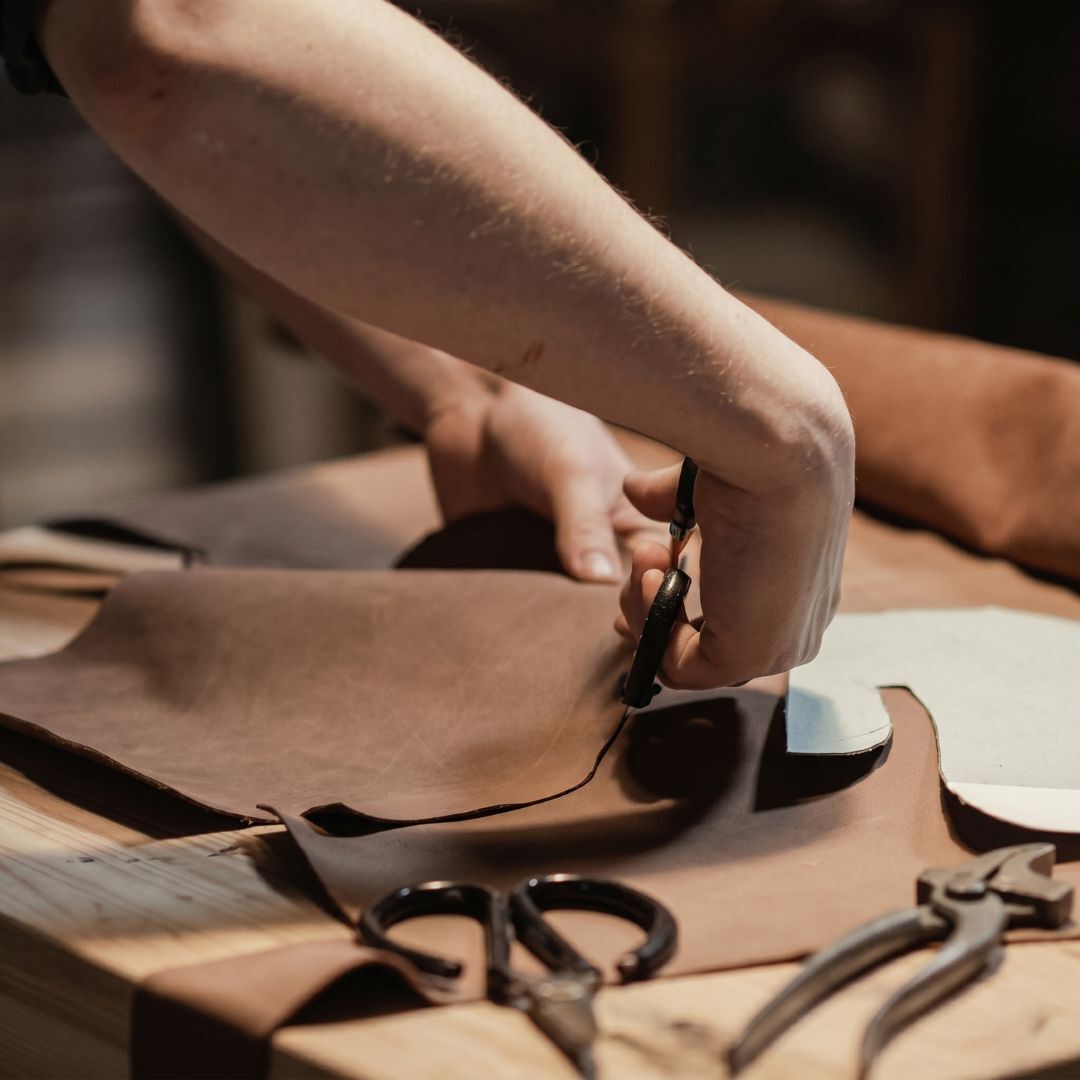
Die-cut palm panels, back cuts, cuff patterns, and reinforcement patches per specification.

  • Die-cut palm panels, back cuts, and cuff patterns.
  • Keystone thumb, index patch, and finger-back reinforcement.
  • Reinforcement patches applied per specification.
Stitching & Assembly
Stitching & Assembly / Step 03

Stitching & Assembly

Lock-stitch and overlock seams with heat-resistant Kevlar thread on welding lines.

  • Lock-stitch and overlock seams.
  • Heat-resistant Kevlar thread on welding lines.
  • Inside-seam construction protects threads from abrasion on cut-resistant models.
QC & Batch Testing
QC & Batch Testing / Step 04

QC & Batch Testing

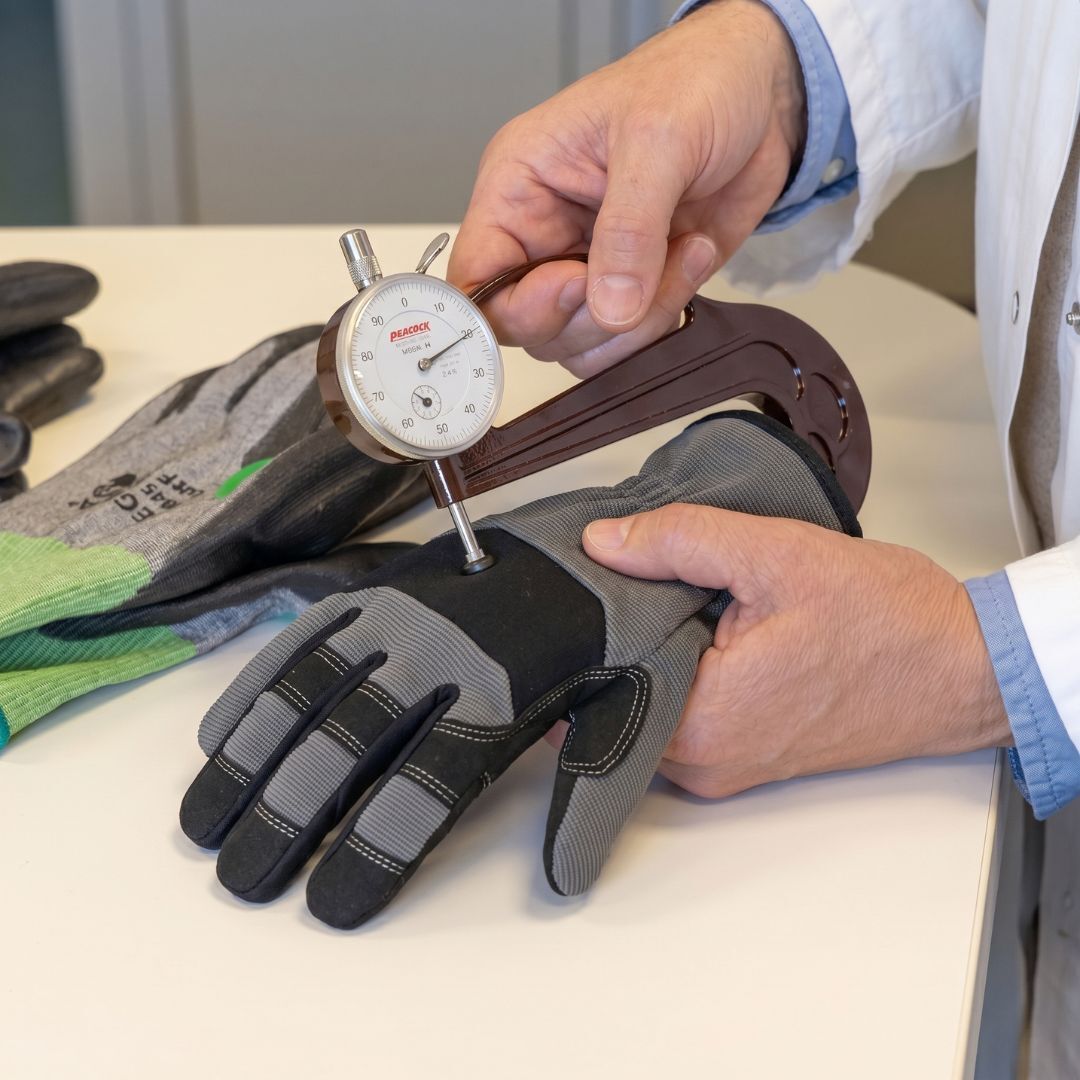
EN 388 / EN 407 / EN 12477 performance checks, with chemical and dexterity verification per ISO standards.

  • EN 388 / EN 407 / EN 12477 performance checks.
  • Chromium VI and azo colorant testing, plus pH value verification.
  • Dexterity assessment per ISO standards.
Understanding Industrial Glove Safety Standards

A reference guide to the European standards that govern protective glove performance. Green-tagged standards are independently tested and certified on Noor Sons gloves; the rest are included for buyer reference across the wider PPE glove category.
Glove Safety Standards

This is the baseline standard every protective glove must meet before any specialized testing applies. It can't be used on its own it always pairs with a protection-specific standard like EN 388 or EN 407. It confirms the glove is free of harmful substances (pH, Chromium VI), correctly sized, comfortable, breathable, and properly labelled with brand, reference number, size, and batch/lot details.

Glove Size6789101112
Palm circumference (mm)152178203229254279304
Length (mm)160171182192204215226

Covers gloves exposed to physical and mechanical hazards abrasion, blade cuts, tearing, and puncture. Each glove is rated on a numeric scale across four core tests, plus an optional impact resistance "P" mark for knuckle protection. A separate, more precise cut test (ISO 13997) is used for higher-risk gloves, rated Level A through F.

TestLevel 1Level 2Level 3Level 4Level 5
Abrasion resistance (cycles)1005002,0008,000
Blade cut resistance (index)1.22.551020
Tear resistance (N)10255075
Puncture resistance (N)2060100150

Applies to gloves protecting against heat and flame in any form open flame, contact heat, convective heat, radiant heat, and small or large splashes of molten metal. Performance is shown as a multi-digit code; gloves claiming no flammability resistance carry a different pictogram than those rated for it.

Performance Level1234
Contact temperature100°C250°C350°C500°C
Threshold time≥ 15 seconds at every level

The dedicated standard for gloves used in manual metal welding, cutting, and related processes. Welding gloves fall into two types Type B, built for high dexterity work like TIG welding, and Type A, designed for general welding processes where mechanical protection matters more than fine control.

Governs gloves designed to protect against chemical products and microorganisms. Three properties are tested: penetration (basic impermeability through seams or pinholes), degradation (how the material physically holds up after chemical contact), and permeation (how long it takes a chemical to pass through the material at a molecular level). Gloves are classified Type A, B, or C based on how many test chemicals they resist and to what performance index.

Passage time>10min>30min>60min>120min>240min>480min
Performance index123456

Specifies requirements for gloves protecting against microorganisms mould, bacteria, and potentially viruses. Penetration by mould and bacteria is tested per EN 374-2 (checking water and air tightness), while virus penetration resistance is tested using a bacteriophage method per ISO 16604. Field of use is critical here, since required protection levels vary significantly by task and environment.

Sets performance requirements for gloves used by pesticide operators and re-entry workers. G1 gloves suit lower-risk, typically single-use scenarios and aren't rated for concentrated formulations. G2 gloves handle both diluted and concentrated pesticides and meet minimum mechanical strength requirements. GR gloves cover only the palm side, for workers contacting dry pesticide residue after application.

Adds requirements for gloves worn in environments where flammable or explosive atmospheres exist or could develop. Electrostatic behaviour is further measured through EN 1149-1 (surface electrostatic properties) or EN 1149-3 (charge decay) though this standard does not apply to electrostatic-dissipative protective gloves.

Covers performance requirements for vibration attenuation in gloves used with vibrating tools. The vibration-reducing material must also meet thickness and consistency requirements. Importantly, these gloves reduce but do not eliminate health risks from hand-transmitted vibration exposure.

Covers gloves worn in environments with ionising radiation or radioactive substances. A glove protecting against radioactive contamination must be waterproof per EN 374-2. One protecting against ionising radiation itself must also contain a measured amount of heavy metal, such as lead, in addition to being waterproof.

Ready to Build Safer Hands?

Partner with Noor Sons for premium protective gloves, leather products, and reliable manufacturing solutions.

Join Our Team

Apply for a Career at Noor Sons

We’re looking for passionate individuals to join our team. Fill out the form to apply and our HR team will contact you soon.
Career Form