

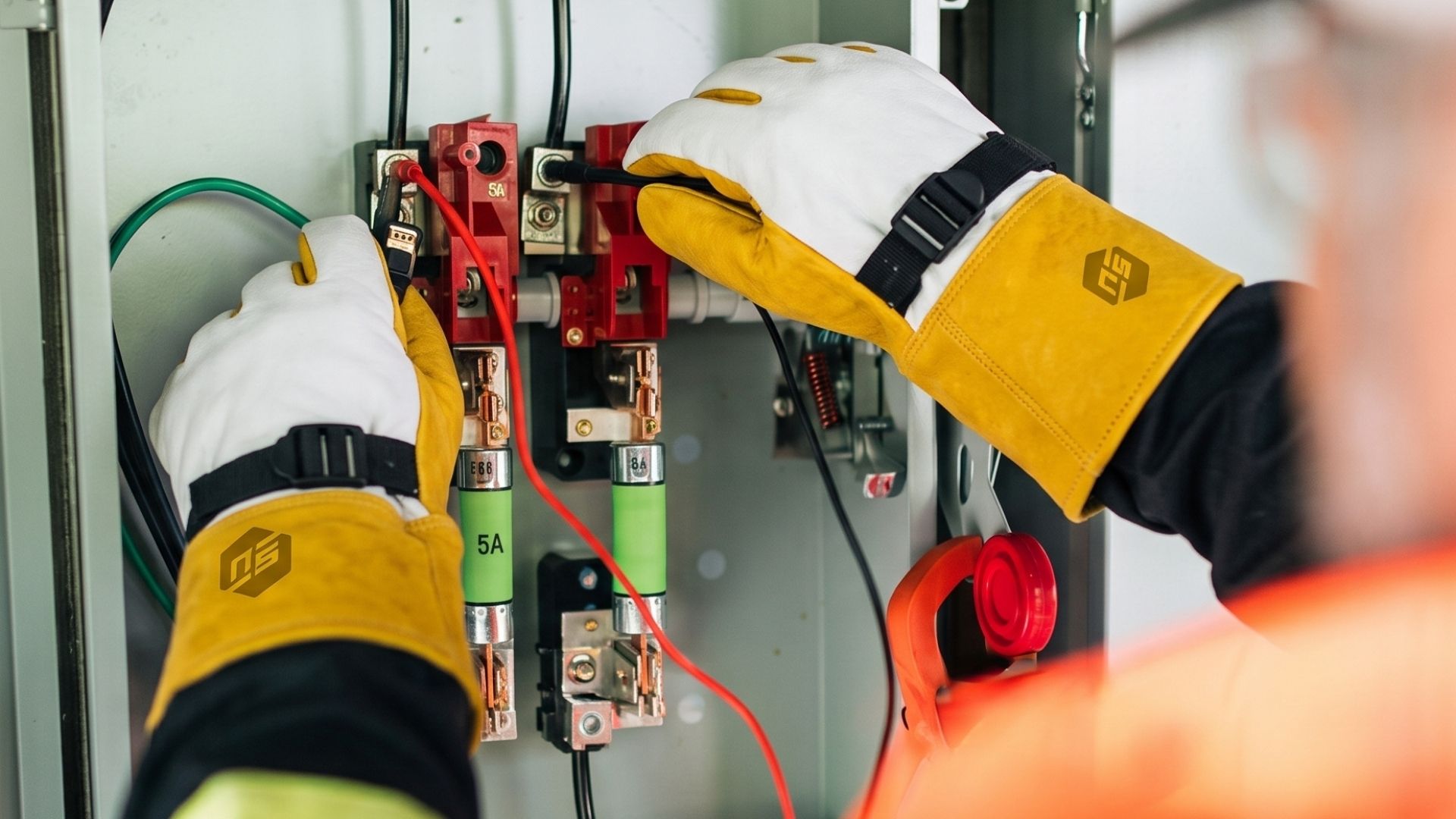
Electrical Safety Starts Before Work Begins
Electricity powers factories, workshops, warehouses, construction sites, and industrial equipment, but it can also create serious workplace risks. Electric shock, arc flash, damaged wiring, overloaded circuits, poor grounding, and unexpected energization can turn a routine task into a major incident.
At Noorsons Safety, we believe effective electrical safety combines hazard identification, safe work procedures, equipment maintenance, worker training, energy isolation, and correctly selected personal protective equipment. Below are 10 important workplace electrical hazards and practical strategies to control them.
1. Arc Flash
An arc flash occurs when electrical current travels through the air between energized conductors or between a conductor and ground. It can release extreme heat and pressure, causing serious burns, flying debris, equipment damage, and life-threatening injuries.
Prevention Strategy
Wherever possible, equipment should be properly de-energized before work begins. Businesses should also carry out electrical risk assessments, maintain equipment, control access to energized systems, and use suitable electrical PPE when residual hazards remain.
Key principle: Reduce energized exposure before relying on protective equipment.
2. Electric Shock
Electric shock happens when electrical current passes through the human body. Common causes include exposed conductors, damaged cables, defective electrical tools, wet conditions, faulty equipment, and poor grounding.
Prevention Strategy
Electrical equipment should be isolated and verified before maintenance whenever practical. Workers must also use hand protection suitable for the identified hazard. Standard leather, mechanical, or general-purpose gloves should never automatically be considered electrical insulating gloves.
Correct electrical safety glove selection should always depend on the task, voltage exposure, workplace requirements, and applicable safety standards.
3. Exposed Energized Parts
Open panels, missing covers, damaged guards, and exposed terminals can create immediate electrical contact hazards. The risk increases in industrial environments where workers may accidentally move tools or hands near energized components.
Prevention Strategy
Electrical components should remain properly enclosed or guarded, and hazardous areas should only be accessed by trained and authorized workers.
A modern approach known as Electrical Exposure Minimization asks an important question: can the worker’s exposure to energized components be eliminated before the task begins?
Preventing exposure is usually more effective than managing it after it occurs.
4. Inadequate Lockout/Tagout Procedures
Switching machinery OFF does not always mean it is safe. Equipment may contain stored electrical energy, backup power, capacitors, or multiple power sources capable of causing unexpected startup or energization.
A proper Lockout/Tagout process should include:
- Identifying all hazardous energy sources
- Shutting the equipment down correctly
- Isolating the energy source
- Applying approved lockout/tagout devices
- Controlling stored energy
- Verifying isolation before work begins
The final step is critical. Never assume isolation—verify it.
This approach is often called Zero-Energy Verification, where workers confirm that hazardous energy has actually been controlled before maintenance starts.
5. Damaged or Incorrect Test Equipment
Multimeters, probes, leads, and electrical diagnostic tools are essential during maintenance, but damaged or incorrectly rated equipment may create additional risks. Worn insulation, cracked probes, damaged test leads, or unsuitable instruments can expose workers to energized components.
Prevention Strategy
Before testing:
- Inspect instruments for damage
- Confirm correct electrical ratings
- Check probes and leads
- Follow manufacturer instructions
- Remove defective equipment from service
Electrical testing should always be performed by competent workers using suitable equipment. Reliable testing depends on both instrument condition and correct testing procedures.
6. Moisture, Dust, and Environmental Contamination
Industrial electrical systems may be exposed to moisture, dust, oils, chemicals, heat, vibration, and metal particles. Over time, these conditions can damage insulation, electrical connections, cables, and equipment enclosures.
Moisture is particularly dangerous because it may increase the risk of electrical shock and equipment failure.
Prevention Strategy
Electrical installations should be suitable for their operating environment. Regular inspections should check for moisture, contamination, damaged enclosures, cable deterioration, and excessive dust.
This approach is known as environment-aware maintenance—maintaining electrical equipment according to the actual conditions in which it operates.
7. Damaged Insulation and Electrical Cables
Electrical insulation creates an important barrier between workers and energized conductors. Cuts, crushing, abrasion, overheating, loose plugs, and poor repairs can gradually weaken this protection.
A cable may still function even when it is no longer safe.
Common warning signs include:
- Cracked or damaged insulation
- Exposed conductors
- Burn marks
- Loose plugs
- Melted components
- Unusual heat
- Burning smells
- Repeated breaker trips
Prevention Strategy
Damaged electrical equipment should be inspected, repaired, or removed from service. A proactive approach known as defect-before-failure management focuses on correcting small defects before they develop into serious electrical failures.
8. Overloaded Circuits
Every electrical circuit is designed to operate within specific limits. Excessive loads, unsuitable temporary wiring, or poorly planned system modifications can cause overheating and damage cables, terminals, insulation, and electrical components.
Warning signs may include:
- Unusual equipment heat
- Repeated breaker trips
- Discoloration
- Burning odors
- Melted insulation
Prevention Strategy
Electrical modifications should be reviewed by qualified personnel. Maintenance teams should also investigate unusual heat before it develops into a larger failure.
This is often described as Thermal Anomaly Detection—using abnormal temperature as an early warning signal for possible electrical problems.
9. Improper Grounding
Grounding helps electrical systems safely manage fault current. If grounding or bonding connections become damaged, loose, disconnected, or incorrectly installed, conductive surfaces may become dangerous during an electrical fault.
Maintenance teams should watch for:
- Damaged grounding pins
- Loose grounding connections
- Modified electrical plugs
- Improvised adapters
- Faulty portable tools
- Repeated protective-device operation
Prevention Strategy
Grounding systems should form part of routine electrical inspection and maintenance. Never assume grounding is correct simply because electrical equipment appears to operate normally.
10. Human Error, Fatigue, and Routine Bias
Not every electrical incident begins with equipment failure. Workers may also make mistakes when they are tired, rushed, distracted, under production pressure, or following unclear procedures.
Another common risk is routine bias. When workers complete the same task repeatedly without an incident, they may gradually underestimate the danger involved.
Businesses can reduce human-factor risks through:
- Clear work procedures
- Pre-job safety discussions
- Competency-based training
- Proper shift handovers
- Stop-work authority
- Near-miss reporting
- Regular safety reviews
The goal is to create error-resistant work systems where safe actions are easier to follow and unsafe shortcuts are harder to take.
Electrical PPE: The Final Layer of Protection
Personal protective equipment remains an important part of electrical safety, but it should not be treated as the first or only control. Effective electrical hazard prevention begins with eliminating or reducing exposure before PPE is required.
Electrical and industrial workers may face electrical contact hazards, abrasion, sharp edges, punctures, tool-handling risks, heat, and environmental contamination. For this reason, one glove cannot safely cover every task.
The correct industrial safety glove should always match the specific hazard, working environment, task requirements, and applicable safety standards.
Choosing the Right Hand Protection
When selecting hand protection for electricians, technicians, maintenance teams, and industrial workers, businesses should focus on four key factors:
- Hazard Type: Identify whether protection is required for electrical insulation, mechanical handling, abrasion, heat, grip, or another risk.
- Fit and Dexterity: Proper glove fit helps workers maintain control when handling tools, wires, terminals, and small components.
- Glove Condition: Damaged, worn, or contaminated gloves may no longer provide the intended protection.
- PPE Compatibility: Gloves should work correctly with other personal protective equipment without creating additional hazards.
This task-specific approach helps organizations make smarter PPE decisions rather than relying on one general-purpose solution.
Building a Proactive Electrical Safety Culture
Strong workplace safety programs do not wait for accidents. Small warning signs such as damaged cables, loose connections, unusual electrical smells, missing panel covers, incomplete lockout procedures, and unsuitable PPE should be treated as early indicators of risk.
Businesses should move from reactive safety toward predictive risk management by asking what could go wrong, whether the hazard can be eliminated, how worker exposure can be reduced, whether equipment is in safe condition, and whether the selected control measures have been properly verified.
Noorsons Safety and Industrial Hand Protection
Noorsons Safety manufactures and exports industrial safety gloves for demanding workplace applications, including electrical, mechanical, welding, assembly, impact, driving, and general-purpose work.
Our focus is on combining quality materials, durability, comfort, practical construction, and task-focused performance for industrial workers and professional buyers. Noorsons Safety also supports OEM and private-label glove manufacturing with customization options depending on material, construction, branding, color, and packaging requirements.
For electrical applications, workers and buyers should always verify that any glove intended for electrical insulation has the appropriate specifications and is suitable for the specific electrical exposure.
Explore professional industrial hand protection at noorsonss.com.
Conclusion
Electrical hazards such as arc flash, electric shock, exposed energized parts, inadequate lockout/tagout procedures, damaged test equipment, contamination, deteriorated cables, overloaded circuits, grounding problems, and human error all require serious attention. The most effective workplace electrical safety programs combine hazard assessment, proper energy isolation, equipment maintenance, worker training, engineering controls, clear procedures, and correctly selected electrical PPE. At Noorsons Safety, we believe safer industrial work begins with understanding the hazard before the task begins, reducing unnecessary exposure, and selecting the right protection for the job. Control the risk. Strengthen the process. Protect the hands that keep industry moving. Visit noorsonss.com to explore professional industrial safety gloves and hand protection solutions.