

Why Proper PPE Glove Fit Matters
When selecting industrial safety gloves, most buyers naturally focus on cut resistance, abrasion protection, heat resistance, durability, grip, or the glove material itself. These factors are important, but one equally critical element is often overlooked: proper PPE glove fit.
The way a glove fits directly affects how comfortably and effectively a worker can perform a task. A glove that is too loose may move around the hand and reduce control, while a glove that is too tight may restrict finger movement and create unnecessary fatigue. Even a high-performance safety glove can become difficult to use if the size or shape does not match the worker’s hand.
A properly fitted glove should feel like a natural extension of the hand. It should allow the worker to grip, lift, handle, assemble, weld, or operate tools without constantly adjusting the glove. This balance between protection, comfort, dexterity, and control is what makes proper glove sizing such an important part of workplace hand protection.
At Noorsons Safety, we believe that effective hand protection should not only protect against job-site hazards. It should also support the way workers actually move, grip, and perform throughout the working day.
The Real Risks of Wearing the Wrong Glove Size
Incorrect safety glove sizing can affect more than comfort. It can interfere with grip stability, tactile control, tool handling, and overall work performance.
Loose gloves often leave extra material around the fingertips or palm. During precision work, mechanical tasks, assembly operations, or material handling, that excess material can reduce fingertip control. The worker may need to grip tools harder simply to maintain stability, which can increase hand fatigue over time.
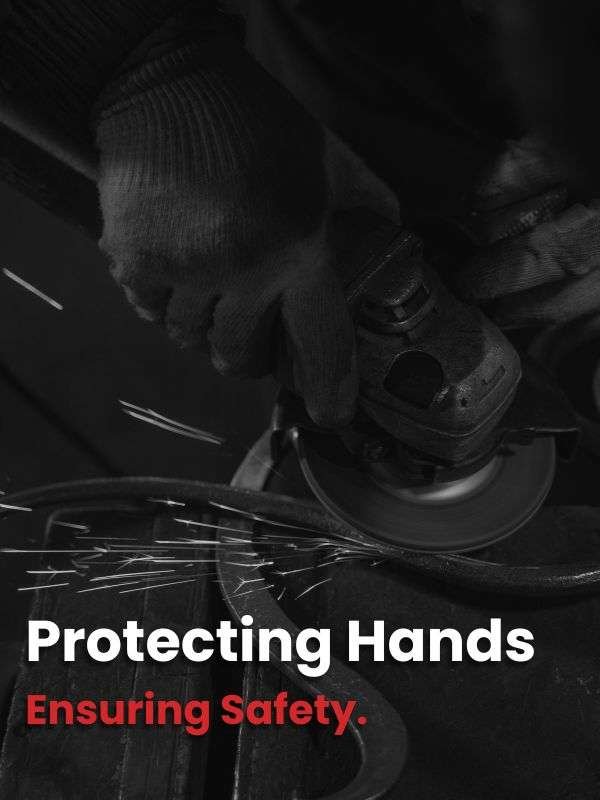
Oversized gloves may also twist or shift during movement. In work environments involving machinery, rotating equipment, sharp edges, or moving components, excess glove material can become an additional concern. The issue is not simply that the glove feels uncomfortable; it is that the glove may no longer move naturally with the hand.
Gloves that are too tight create a different problem. Excessive tension across the fingers, palm, or knuckles can make normal movements harder. Workers may experience pressure around the fingertips, difficulty forming a natural grip, or discomfort during repetitive tasks.
A good PPE glove fit should therefore sit securely around the hand without squeezing it. The worker should be able to bend, stretch, rotate, grip, and release naturally without fighting against the glove.
Proper Glove Fit Improves Grip, Control, and Dexterity
Industrial tasks often depend on controlled hand movements. From holding a wrench to handling sheet material, operating a power tool, lifting boxes, tightening components, or completing precision assembly work, the worker relies heavily on grip and finger control.
This is where ergonomic work gloves and correct sizing work together.
When the glove follows the natural shape of the hand, less unnecessary movement takes place inside the glove. The worker can maintain a more stable grip and use the fingertips more accurately. This can be especially important in industries where small adjustments and repeated hand movements are part of everyday work.
Proper fitting hand protection gloves can also reduce the need for excessive grip force. If a loose glove keeps sliding or bunching, the worker may subconsciously squeeze harder. Over the course of a long shift, that extra effort can contribute to fatigue.
The right fit helps the glove work with the hand instead of against it.
How to Measure Your Hand for Safety Gloves
Accurate measurements provide the best starting point for selecting the correct glove size. Rather than relying only on labels such as Small, Medium, Large, or XL, workers should compare their actual hand measurements with the manufacturer’s glove size guide.
To determine the right starting size:
- Measure around the widest part of the palm, just below the knuckles, without including the thumb.
- Measure from the wrist crease to the tip of the middle finger.
- Compare both measurements with the manufacturer-specific safety glove sizing chart.
It is also useful to measure both hands. If one hand is slightly larger, choose the glove size based on the larger measurement.
Once the size is selected, the worker should wear the glove and perform normal hand movements. Measurements are useful, but a real-world fit test remains essential because glove construction, materials, coatings, and finger shapes can vary between different models.
How Should a Proper Safety Glove Fit?
A correctly fitted glove should feel secure from the moment it is worn. The palm area should sit naturally against the hand without excessive bunching, and the fingertips should reach close to the ends of the glove without pressing painfully against them.
The worker should also be able to open the hand fully, make a fist, rotate the wrist, grip a tool, and handle smaller items without unusual resistance.
A useful fit check should focus on three areas:
- Finger control: The fingertips should not contain excessive empty space, and the fingers should still move freely.
- Palm and knuckles: The glove should follow the hand without bunching or creating excessive tension.
- Grip performance: The worker should be able to hold tools or materials securely without constantly adjusting the glove.
If the glove slides, twists, restricts movement, or creates strong pressure points, another size or glove style should be considered.
Why Glove Material Changes the Way Fit Feels
Not every safety glove should fit exactly the same way. Different materials behave differently when they bend, stretch, grip, or respond to repeated use.
Understanding the material is therefore an important part of work glove sizing.
Leather Safety Gloves
Leather remains one of the most widely used materials for industrial hand protection because of its durability, strength, and suitability for demanding work.
A well-constructed leather glove can gradually adapt to the shape of the user’s hand during use. However, that does not mean workers should deliberately choose an excessively tight glove in the hope that it will eventually stretch.
The glove should already allow comfortable movement from the beginning.
Leather gloves are commonly used in material handling, driving applications, general industrial work, and many welding environments where durability and robust hand coverage are important.
Nitrile and Synthetic Work Gloves
Synthetic materials and nitrile-coated gloves are often chosen for tasks requiring a closer fit, reliable grip, and controlled hand movement.
Because these gloves can follow the shape of the hand more closely, correct sizing becomes especially important. If the glove is too large, fingertip precision can suffer. If it is too small, the worker may experience restriction across the fingers or palm.
These types of industrial safety gloves are commonly used for assembly, warehousing, maintenance, mechanical tasks, equipment handling, and other applications where grip and dexterity are both important.
Knit and Coated Gloves for Flexible Hand Movement
Knitted liners and coated glove constructions are designed to offer flexibility, breathability, and a close-fitting feel.
Their stretch makes them useful for jobs involving frequent movement, repetitive handling, packaging, warehouse operations, assembly, and light mechanical work.
However, stretch should not be used as a substitute for correct sizing. A glove that must be heavily stretched simply to fit the hand may create pressure and discomfort throughout the shift.
The goal is always the same: select a glove that remains secure without creating unnecessary resistance.
Welding Gloves Require a Different Fit Approach
Heavy-duty and welding gloves often contain thicker materials than lightweight assembly gloves. Because of that, they may naturally feel less close-fitting.
This does not automatically mean the glove is oversized.
The correct fit depends on the job.
A TIG welding glove, for example, may be designed to allow greater finger movement because the welder often needs more precise hand control. A heavier welding or material-handling glove may prioritize heat resistance, durability, and coverage differently.
The important point is that glove fit must always be evaluated in relation to the actual task.
There is no single fit profile that works for every type of PPE glove.
One Glove Size Cannot Suit Every Worker
Workforces are made up of people with different palm widths, finger lengths, hand shapes, and proportions.
For that reason, offering only one or two glove sizes can create unnecessary fitting problems.
A worker with narrower hands may need a different glove profile from someone with a wider palm. Another worker may have longer fingers but a smaller palm circumference. These differences matter, particularly in jobs requiring precision and repetitive movement.
A modern workplace PPE program should therefore offer enough sizing options to accommodate different workers comfortably.
Inclusive sizing supports better usability, better comfort, and more consistent PPE use across the workforce.
Ergonomic Work Gloves and Long-Shift Comfort
Ergonomics plays an important role in modern PPE design.
An ergonomic glove should support natural hand movement instead of forcing the hand into an uncomfortable position. Features such as pre-curved fingers, flexible knuckle zones, shaped palms, stretch panels, and carefully positioned seams can make a noticeable difference during long periods of use.
However, even the best ergonomic design cannot compensate for the wrong size.
Correct sizing and ergonomic construction work together.
When both are right, workers can move more naturally, grip more comfortably, and maintain better control during repetitive tasks. This can help reduce unnecessary hand effort and improve the overall wearing experience throughout the shift.
PPE Glove Fit and Workplace Safety Programs
Proper glove selection should never depend on size alone.
Employers and safety professionals should first identify the actual hazards involved in the task. These may include cuts, abrasion, punctures, heat, chemicals, rough surfaces, sharp edges, mechanical exposure, or other job-specific risks.
Once the hazard is understood, the glove should be selected based on its protective properties, material, fit, comfort, and ability to support the task.
A strong workplace hand protection program therefore combines hazard assessment with real-world usability.
The best glove is not simply the one with the highest rating. It is the glove that provides the required protection while still allowing the worker to perform the job properly.
Understanding Safety Glove Performance Ratings
Industrial glove buyers may come across performance classifications such as ANSI/ISEA 105 when comparing different glove options.
These classifications help users understand specific performance characteristics such as cut resistance, abrasion resistance, and puncture resistance.
However, performance ratings and glove fit address different parts of the safety equation.
A glove may carry an appropriate resistance rating for a particular hazard but still perform poorly in practice if the worker cannot grip properly or move the fingers comfortably.
That is why effective PPE selection should always consider both hazard protection and proper glove fit.
The protection level should match the task, and the glove should match the worker.
Building a Better Safety Glove Program
Organizations that want to improve their hand protection strategy should make glove fit part of the regular PPE selection process.
Workers should be able to test glove sizes before widespread use whenever possible. Their feedback can reveal issues with fingertip length, palm fit, flexibility, grip, or comfort that may not be obvious from a specification sheet.
Safety teams should also inspect gloves regularly. Damage, worn coatings, torn seams, punctures, excessive stretching, heat damage, chemical deterioration, or loss of grip can reduce performance.
There is no single replacement schedule that works for every glove. Replacement depends on the glove material, frequency of use, exposure conditions, task severity, and manufacturer guidance.
A glove should be removed from service when it is damaged or can no longer provide the intended level of protection.
Common Glove Sizing Mistakes to Avoid
One of the most common mistakes is choosing safety gloves only by the S, M, L, or XL label. These labels can vary between manufacturers and even between different glove models from the same supplier.
Another mistake is assuming that tighter gloves automatically provide better protection. Excessive tightness can interfere with finger movement and comfort, while excessive looseness can reduce control.
Workers and safety managers should also avoid ignoring feedback from the people actually wearing the gloves. A specification sheet may confirm performance ratings, but only real use can show whether the glove fits properly during the task.
This is why safety glove sizing, worker feedback, and task testing should be part of the same selection process.
Why Choose Noorsons Safety?
At Noorsons Safety, we understand that industrial hand protection is not only about selecting a glove material or protection rating.
The glove also needs to support the worker performing the task.
Our range of industrial safety gloves is designed for professional workplace applications including assembly, mechanical work, general handling, driving, welding, TIG and MIG welding, and other demanding industrial environments.
Our approach focuses on balancing practical protection with comfort, movement, durability, and task-focused performance.
Whether the job requires controlled fingertip movement or heavier-duty coverage, selecting the correct glove type and size can help create a more effective workplace hand protection program.
Visit noorsonss.com to explore Noorsons Safety hand protection solutions for industrial and professional applications.
Conclusion – The Right Fit Strengthens Hand Protection
Proper PPE glove fit is one of the most important elements of effective workplace hand protection. A safety glove should not simply match the hazard; it should also match the worker and the task. Gloves that are too loose or too tight can affect grip, finger control, dexterity, comfort, and overall usability, while correctly sized ergonomic work gloves allow the hand to move more naturally throughout the working day. By measuring hands accurately, following manufacturer-specific sizing charts, testing gloves under real working conditions, inspecting them regularly, and selecting protection based on actual workplace hazards, businesses can build a stronger and more reliable PPE program. Noorsons Safety supports this approach with professional industrial safety gloves designed for real-world applications where protection, fit, comfort, and performance all matter.