
The Right Glove Can Change the Way You Work
Hands are involved in almost every industrial task. From tightening a small screw and connecting electrical components to opening cartons, handling tools, moving materials, or assembling automotive parts, workers depend on their hands throughout the entire shift. That makes choosing the right work safety gloves an important part of both workplace protection and everyday productivity.
But the strongest or thickest glove is not always the best glove. A worker handling tiny fasteners or using a screwdriver needs very different hand protection from someone moving heavy cartons or rough materials. Using a glove that is too bulky can reduce control, while choosing a glove that is too light for demanding work may result in faster wear and inadequate protection.
This is where the difference between assembly gloves and all-round gloves becomes important. Both are valuable forms of PPE hand protection, but they are designed around different working requirements. Understanding those differences can help businesses select gloves that provide the right balance of grip, dexterity, comfort, durability, and protection.
What Are Assembly Gloves?
Assembly gloves are designed for jobs where workers need excellent finger movement and close control over the objects they handle. They are usually lightweight, flexible, and close-fitting, allowing the glove to move naturally with the hand rather than restricting it.
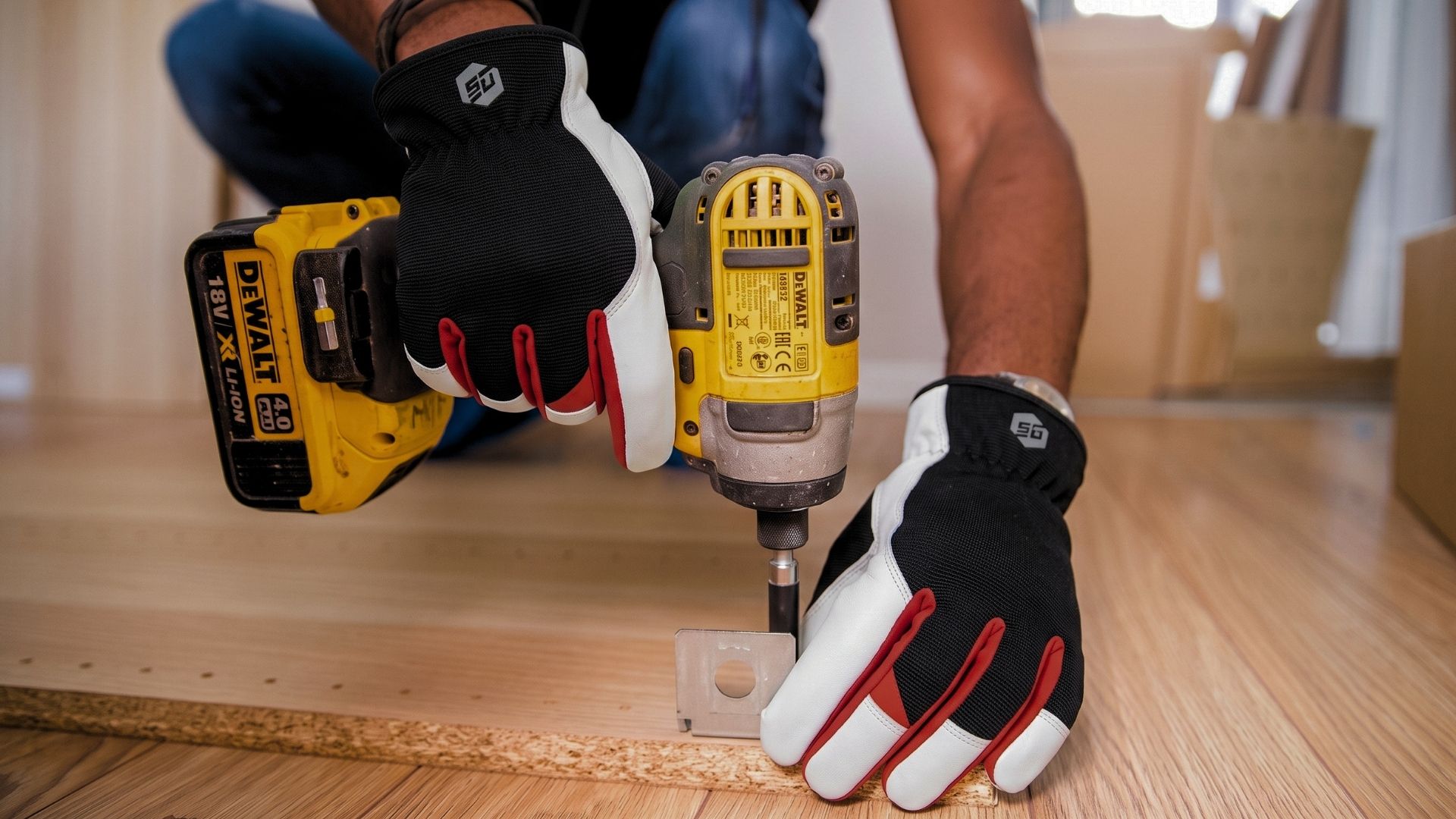
Think about a worker using a screwdriver, picking up small screws, fitting nuts and bolts, connecting cables, handling electrical components, sorting small automotive parts, or packing delicate products. These tasks may not require a thick heavy-duty glove, but they do require reliable grip and enough tactile sensitivity to feel what the fingers are doing.
For that reason, a quality assembly glove often feels almost like a protective second layer over the hand. It helps provide basic protection from everyday workplace contact while allowing workers to continue performing detailed tasks efficiently.
Why Dexterity Matters in Assembly Work
Dexterity is one of the most important characteristics of an assembly work glove. In precision environments, workers may repeat the same small hand movements hundreds of times during a shift. Even a slight restriction in finger mobility can make these jobs slower and more tiring.
A properly fitted assembly glove allows workers to hold small components, operate hand tools, rotate screws, handle packaging, grip wires, and perform repetitive assembly work without constantly removing their gloves. This can be particularly useful in manufacturing and maintenance environments where stopping to remove PPE every time a precise movement is required is impractical.
Good dexterity can also support safer tool handling. When workers can maintain better control of a screwdriver, pliers, small wrench, cutter, or other light hand tool, they are less likely to lose grip because the glove feels oversized or excessively stiff.
Materials That Make Assembly Gloves Effective
Most modern assembly gloves use lightweight knitted liners manufactured from materials such as nylon, polyester, or flexible synthetic blends. These materials help create a close fit while allowing the hand to bend, stretch, and move naturally.
The palm and fingertips are then commonly coated to improve grip and abrasion resistance. Polyurethane (PU) is widely used for precision applications because it can be applied in a very thin layer. This helps preserve fingertip sensitivity and makes PU-coated gloves particularly useful for dry assembly, electronics, inspection, and light manufacturing work.
Nitrile and microfoam nitrile coatings are another popular option. They generally provide stronger resistance to abrasion and can perform well when workers encounter light oils, grease, or industrial components. Microfoam nitrile coatings can also offer a good combination of grip, flexibility, and breathability, making them suitable for long periods of repetitive handling.
Where Assembly Gloves Work Best
Assembly gloves are extremely versatile within light-to-medium industrial applications. They are particularly effective when a task requires workers to repeatedly pick up, position, adjust, fasten, inspect, or move smaller objects.
Common applications include:
- Electronics and electrical component assembly
- Using screwdrivers, pliers, small wrenches, and light tools
- Handling screws, nuts, bolts, fasteners, wires, and cables
- Automotive assembly and small-parts installation
- Order picking, packing, carton handling, and warehouse sorting
- Quality inspection and product handling
- Light maintenance and engineering work
- Furniture, appliance, and equipment assembly
In these environments, the goal is not simply maximum protection. The goal is appropriate protection without sacrificing control. That balance is what makes assembly gloves particularly valuable for businesses where employees perform detailed work throughout the day.
Comfort Matters During Long Working Hours
A glove may provide good grip, but if employees find it uncomfortable after twenty minutes, it is unlikely to be the right solution for an eight-hour working environment. Comfort therefore plays a major role in effective industrial hand protection.
Many assembly gloves use breathable knitted backs that allow air to circulate around the hand. Palm coatings are positioned where grip and protection are required, while the uncoated or breathable back helps reduce excessive heat buildup. This construction can be particularly beneficial in manufacturing facilities, warehouses, workshops, and production lines where gloves are worn for long periods.
Fit is equally important. A glove that is too loose can reduce control and create unnecessary material around the fingertips. A glove that is too tight may cause fatigue and discomfort. Selecting the correct glove size helps workers achieve the dexterity, grip, and comfort the glove was designed to provide.
What Are All-Round Gloves?
While assembly gloves specialize in precision, all-round gloves are designed for broader everyday handling. They are often referred to as general-purpose work gloves because they can support a wide range of routine industrial, warehouse, maintenance, construction, and material-handling tasks.
All-round gloves are normally more robust than lightweight assembly gloves. Depending on their construction, they may feature thicker nitrile or latex coatings, stronger knitted liners, leather, reinforced areas, or additional material designed to withstand repeated friction and rougher surfaces.
They are an excellent choice when workers do not require extremely fine fingertip sensitivity but need dependable grip and durability throughout general daily work.
Assembly Gloves vs. All-Round Gloves: What Really Changes?
The biggest difference between the two categories is the balance between dexterity and robustness.
An assembly worker handling a small electrical connector, tightening screws, fitting components, or inspecting finished products needs to feel and control small objects accurately. A lightweight PU-coated or nitrile-coated assembly glove is generally better suited to this type of work.
A warehouse or maintenance worker may spend the day lifting cartons, carrying equipment, moving materials, handling tools, and working with rougher surfaces. Here, an all-round glove with greater abrasion resistance and a more substantial coating may be the more practical choice.
In simple terms:
- Choose assembly gloves when precision, flexibility, tactile sensitivity, and control are priorities.
- Choose all-round gloves when durability, versatility, and repeated general material handling are more important.
- Choose specialized protection when the job involves significant cut, heat, chemical, puncture, impact, or other specific hazards.
The correct glove should always follow the hazard—not simply the job title.
Consider the Working Environment
The working environment can change how a glove performs. A coating that provides excellent grip in a clean, dry environment may behave differently around oil, moisture, dust, or rough materials.
For dry assembly and precision handling, PU-coated assembly gloves are commonly preferred because they offer thin, controlled grip without significantly reducing tactile sensitivity. For jobs involving light oil or greasy components, nitrile-based coatings can provide better resistance and more secure handling.
Businesses should therefore consider what workers actually touch during a normal shift. Are they handling clean components, oily machine parts, cardboard boxes, metal fasteners, cables, tools, or abrasive surfaces? Understanding the real working conditions makes it much easier to select the appropriate coating and glove construction.
Protection Standards Should Not Be Ignored
Comfort and grip are important, but they should never replace proper hazard assessment. If workers face mechanical risks, businesses should evaluate gloves according to relevant safety requirements such as EN 388, which is commonly associated with protection against mechanical risks.
The required level of protection depends on the application. Standard lightweight assembly gloves may be suitable for routine component handling but should not automatically be considered appropriate for sharp sheet metal, exposed blades, broken glass, or serious puncture hazards.
When a task introduces greater risk, businesses should select gloves specifically designed and tested for that hazard. PPE selection should always be based on actual workplace conditions and applicable safety requirements rather than appearance alone.
Why One Glove Should Not Be Used for Every Job
It can be tempting for businesses to purchase one general glove and issue it across every department. While this may appear simpler, it does not always provide the best combination of safety, comfort, productivity, and cost efficiency.
An assembly worker may struggle with a glove that is too thick, while a warehouse worker may quickly wear through a glove designed only for lightweight precision tasks. In both situations, the glove is technically being used—but it is not being matched correctly to the job.
A better PPE strategy is to group tasks according to their real requirements. Precision workers can use assembly gloves, general handlers can use all-round gloves, and employees exposed to specific hazards can use specialized hand protection. This approach can help reduce unnecessary glove replacement while giving workers protection that actually supports the task they perform.
Better Grip Can Support Better Productivity
Grip is about more than preventing an object from slipping out of the hand. A secure grip can reduce the amount of force workers need to apply while holding tools, components, cartons, or equipment.
For repetitive tasks, this can make a meaningful difference. If employees continuously handle screws, tools, parts, packages, and components throughout the day, a glove that provides suitable friction and control may help make each movement more efficient.
This is one reason modern assembly safety gloves focus so heavily on coating technology. Manufacturers aim to provide useful grip while keeping the coating thin enough to preserve natural hand movement. The result is hand protection designed not only around safety, but also around the realities of modern production and assembly work.
Choosing Assembly Gloves for Your Business
Before purchasing assembly gloves, look beyond appearance or price alone. Start by examining the actual tasks employees perform and the conditions in which they work.
Consider factors such as:
- How small are the components being handled?
- Do workers regularly use screwdrivers or other precision tools?
- Is the environment dry, oily, dusty, or slightly wet?
- How much abrasion does the glove experience?
- How long will employees wear the gloves during each shift?
- Is additional cut, puncture, heat, or chemical protection required?
When these questions are answered properly, selecting suitable work safety gloves becomes much easier. The best glove is the one that matches both the worker and the application.
The Business Value of Correct Hand Protection
Choosing the right glove is not simply a PPE purchasing decision. It can influence how comfortably and efficiently employees work every day.
A well-selected assembly glove can help workers maintain control of small tools and components without constantly adjusting or removing their PPE. A properly selected all-round glove can provide the durability required for repeated handling without wearing prematurely.
For businesses, this means glove selection can influence worker comfort, PPE consumption, productivity, hand protection, and overall operational efficiency. The cheapest glove per pair is not necessarily the most cost-effective glove over an entire working shift or project.
Conclusion: Precision Where You Need It, Protection Where It Matters
There is no single work glove that is perfect for every task. Effective PPE hand protection begins by understanding exactly what workers do with their hands.
For assembly lines, automotive components, electronics, packaging, small fasteners, screwdrivers, cables, inspection work, light tools, and other detailed tasks, assembly gloves provide an excellent balance of grip, flexibility, comfort, and tactile control. For tougher everyday handling, warehouses, maintenance, construction, and general material movement, all-round gloves can provide the additional durability those applications demand.
The key is simple: match the glove to the task, the environment, and the level of risk.
At Noorsons Safety, we understand that good hand protection should help people work, not get in the way of their work. Our range of safety gloves is designed to support different industrial applications, from precision assembly to demanding general-purpose handling.
Protect every movement. Improve every grip. Choose hand protection built for the job.
Explore professional assembly gloves, general-purpose gloves, welding gloves, and industrial hand protection solutions at Noorsonss.com.